
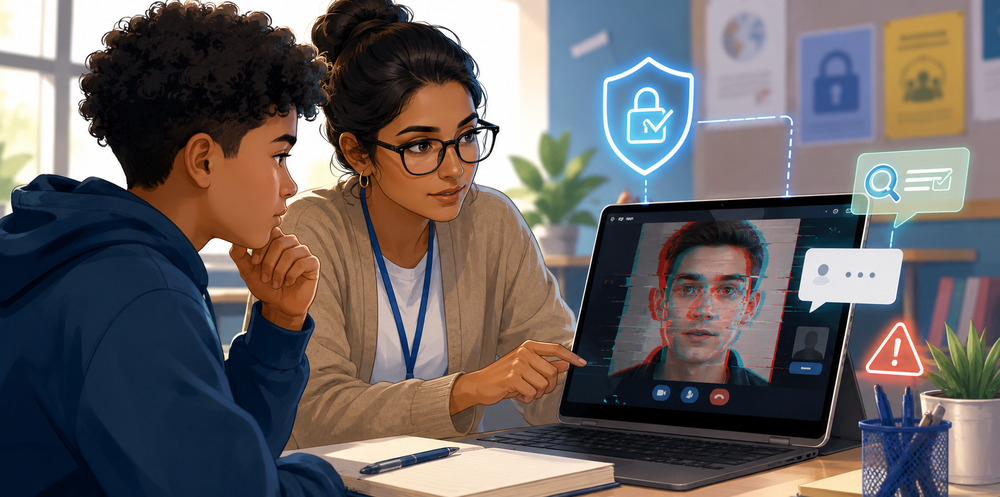
Artificial intelligence can create realistic videos, voices, images, and messages that make it look or sound like someone said or did something they never did. These are called deepfakes, and they can be used to impersonate friends, family members, teachers, administrators, coworkers, or public figures.
Be especially cautious with messages that create urgency or pressure, such as requests to click a link, share a password, send money, unlock an account, or keep something secret. Even if the message looks or sounds familiar, pause before responding.
To protect yourself, verify suspicious messages through a trusted method, such as calling the person directly or checking with a teacher, administrator, or the IT Department. Never share passwords or personal information through email, text, chat, or phone. Families may also want to create a private verification word or phrase for emergencies.
A familiar face, voice, name, or email address does not always mean a message is real. Think before you click. Verify before you trust. Report anything suspicious.